Heads up: This post may have affiliate links. As an Amazon Associate, I earn from qualifying purchases.
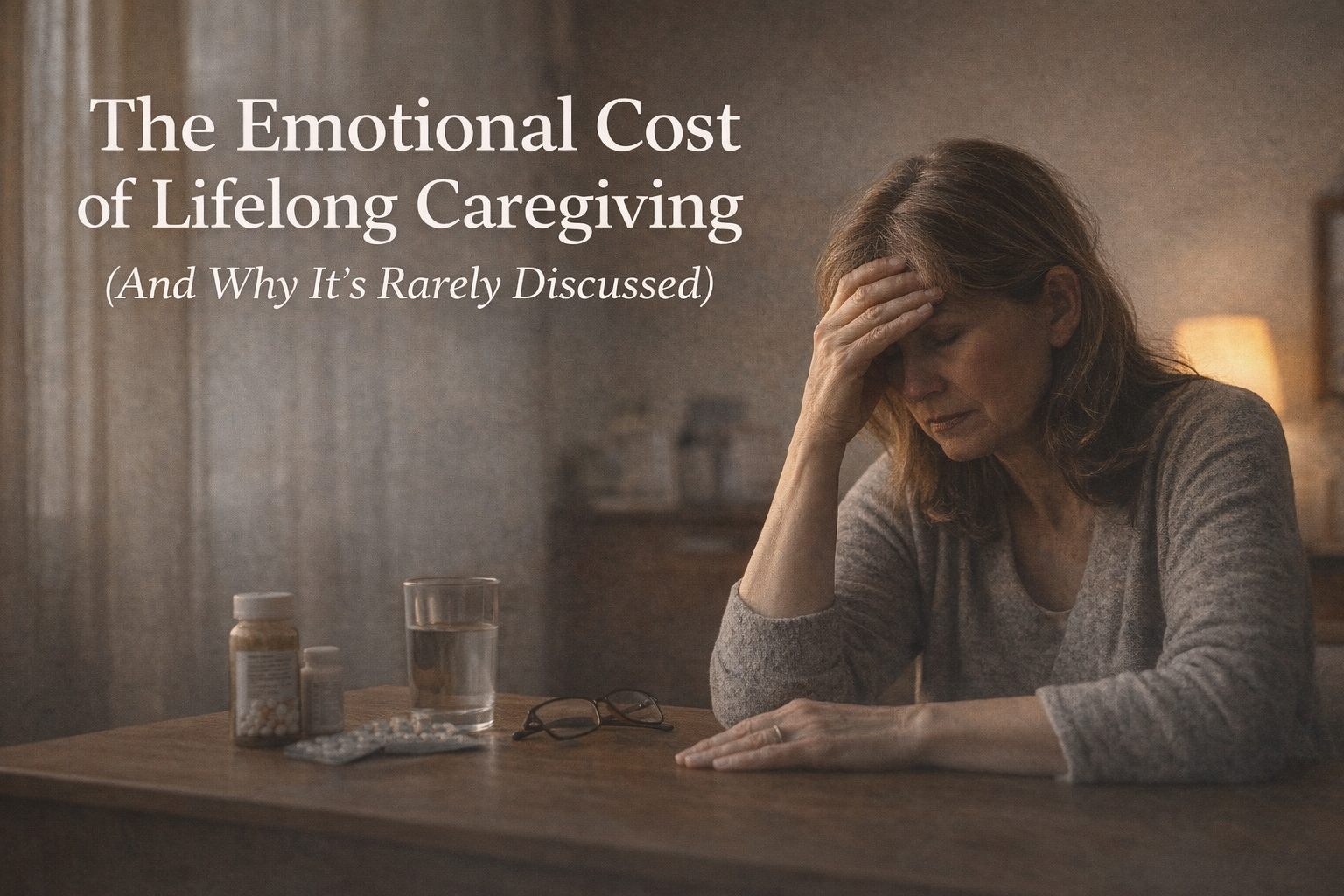
The Emotional Cost of Lifelong Caregiving (And Why It’s Rarely Discussed)
Caregiving is often framed as an act of compassion.
And it is.
But what’s less frequently discussed is the cost that comes with it, especially when that caregiving isn’t temporary, but lifelong.
When Caregiving Becomes Identity
For many people, caregiving doesn’t begin with a decision.
It develops gradually.
Helping becomes routine.
Responsibility increases.
And over time, caregiving becomes less of a role and more of an identity.
At that point, it’s no longer something you do.
It’s something you are.
The Long-Term Weight
Short-term caregiving is challenging.
Lifelong caregiving is something different entirely.
It requires:
- sustained emotional energy
- long-term sacrifice
- constant adaptation
And perhaps most importantly, it requires endurance.
Not just for months or years but for decades.
The Silence Around It
One of the most difficult parts of long-term caregiving is how rarely its emotional reality is discussed openly.
Caregivers are often expected to:
- be strong
- remain selfless
- avoid expressing frustration
But those expectations create silence.
And silence makes the experience heavier.
Why Honesty Matters
Acknowledging the emotional cost of caregiving doesn’t diminish its value.
It strengthens it.
Because honesty allows:
- better support
- more realistic expectations
- deeper understanding
And ultimately, it allows caregivers to feel seen.
A Real Example of This Experience
Debbie Miller’s Raising Ricky is a memoir that explores this exact journey. Through her lifelong commitment to her brother with Down syndrome, she illustrates what caregiving looks like over time not just in moments, but across an entire life.
It’s a story of endurance, responsibility, and the kind of commitment that doesn’t end.
Caregiving is one of the most meaningful roles a person can take on.
But it is also one of the most demanding.
And until we talk about both sides of that truth, we will continue to misunderstand what it really requires.